


Ways to trade and invest
One IPO. Four ways to make moves.

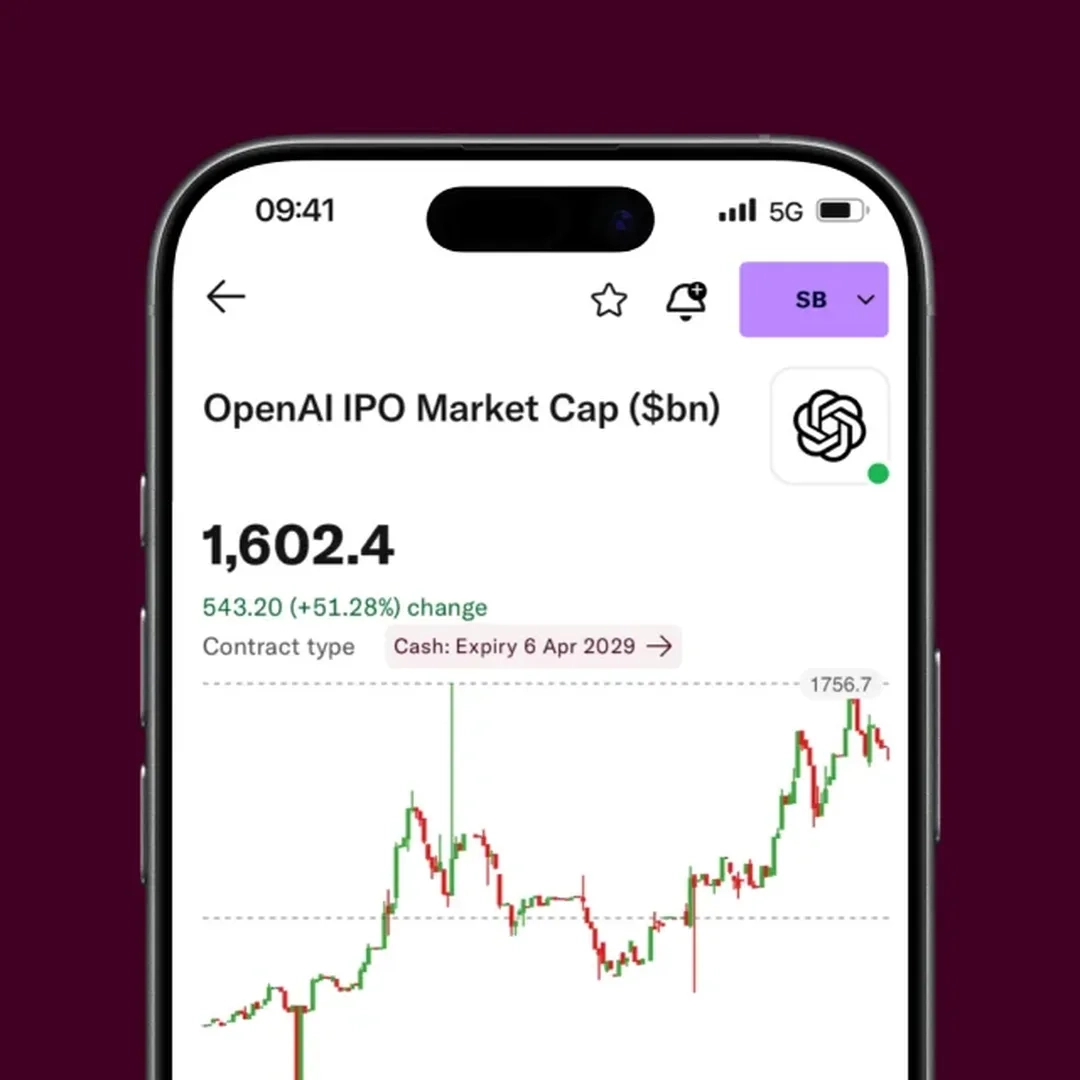
Pre-IPO Day 1 Market Cap
Think a company will be worth more or less than the markets expect? This product prices an upcoming IPO on the company’s total market capitalisation at the end of the first day of unconditional trading. Clients trade on the company’s overall market cap valuation, not on an individual share price. Positions settle after the first day of trading.

Pre-IPO Share Price CFD/SB
Have a view on where the company’s share price is heading? This product is offered once the official intention to float by a company has been registered with the relevant exchange body and relevant documents have been filed which include detailed information regarding the float. Pricing is linked to IG's Pre-IPO Market Cap valuation market. Official prospectus details, including float information (usually available 2–3 weeks before the float date), are used with the number of shares in the float to derive an implied share price. The position automatically rolls into a standard CFD or spread bet on listing.

IPO allocation
Want to own shares when the company goes live? Apply to buy shares on selected IPOs before public trading begins in an investment account. Subject to allocation and eligibility.

Post-listing
Want to trade price movements or own shares in the company? Trade company price moves with spread betting and CFDs or buy, hold and sell shares with an investment account. Available after the company lists.
What IPOs are available?
The IPOs everyone is talking about.

Anthropic IPO
One of the AI powerhouses, behind the Claude AI suite, Anthropic is currently rumoured for listing and is available to trade with IG’s Pre-IPO markets. Take a position on its expected valuation or share price with spread betting and CFDs.

OpenAI IPO
A pioneer in the AI space, OpenAI is rumoured for listing and could be one of the biggest names to hit the markets. Trade it with our Pre-IPO markets with spread betting and CFDs, on its expected valuation or share price.

SpaceX IPO
A leader in space tech, telecommunications and AI. SpaceX has officially launched, and you can either buy and hold shares with an investment account, or trade the market moves with spread betting and CFDs.
More companies to watch.
Explore the full range of rumoured IPOs available to trade right now with IG’s Pre-IPO market.


Compare your options.
Understand more about what you can trade and invest in, and when each product is available when a company goes public.

What am I trading?
You’re trading what the company’s expected market value will be at the end of the first trading day.
When is it available?
This depends on when the company is added to our Pre-IPO markets, but potentially weeks or months before listing.
What product types can you use?
You can trade Pre-IPO markets using a spread betting or CFD account on IG.
Can you go long or short?
You can choose to go long or short on the expected market value of the company.
Do you own shares?
No, with Pre-IPO trading, you own no underlying shares in the company.
What happens afterwards?
Once the first day of trading has finished, all spread bets and CFDs are settled based on the market value of the company.
How is the price set, and what can change it?
Before a company files its offer details, IG’s price is an estimate of its total market value, based on press reports, client activity and market sentiment. Once the price range and shares outstanding are filed, IG updates the price, which can move sharply, including on open positions. Settlement uses basic shares outstanding only, excluding optional and other non-outstanding shares.
Open your account
Ready to get involved?

1. Log in or open your IG account.
Either log in to your account or open a new one by answering a few questions.

2. Find an IPO market.
Search for the company you want to trade and explore the markets available to you.
3. Take your position.
Choose your market, review the details and place your trade.
Related articles
Latest IPO news

Anthropic IPO: what traders need to know.
The Claude developer is expected to price a $75bn-$100bn Nasdaq listing on 19 November at up to $2 trillion, potentially testing appetite for AI at scale.

The best AI stocks to watch.
Advanced Micro Devices, Broadcom, Nvidia, Palantir Technologies and Super Micro Computer may be the best AI stocks to watch.
Anthropic IPO: key dates to know.
Anthropic filed confidential IPO paperwork with the SEC on 1 June 2026, setting the stage for one of the most highly anticipated stock market debuts in years. Here’s what you need to know.
What it costs to trade IPOs.
Trading costs for pre-IPO markets and after the company has listed, including overnight funding.
*Past 10pm UK time. Based on the relevant interbank rate for the asset. If you're long, you'll typically pay this; if you're short, you'll typically receive it.
Everything you need to know before you make your move.
An initial public offering (IPO) is when a private company lists its shares on a stock exchange for the first time. With IG, you can trade on a company's anticipated market value or share price before it goes public, apply to buy shares in selected IPOs, or trade and invest once the company lists.
IG prices this market synthetically. There is no live share price to follow before a company lists, so IG builds its own estimate of what the company’s total market value (market cap) will be when trading begins. That estimate is based on press reports, rumour and speculation, not an official valuation or confirmed IPO terms. IG updates the price manually as new information emerges. The price is built into the spread, which is shown on your deal ticket before you trade. It means IG’s price can sit above where the company is expected to list. For example, if a company is expected to IPO at around £10bn, IG might price the market at £13bn.
You trade the company’s overall market cap rather than an individual share price. Your profit or loss is the difference between IG’s price and the market cap at the close of the first day of unconditional trading. In the example above, if the company closes Day 1 at £15bn, a client who went long at £13bn profits, and a client who went short loses.
On the day of the float, the market is switched off about an hour before trading begins. It restarts once the stock starts trading, when IG’s price tracks the share price and the market value implied by it. Day 1 positions move to close-only that day. Settlement is the closing share price multiplied by the number of shares IG treats as part of the offer.
Pricing risks to be aware of
• No official valuation: The price relies on press reports and speculation, which can be wrong, incomplete or change quickly. There is no exchange price to check it against.
• Spread: IG’s price includes a spread, so a long position needs the Day 1 market cap to close above IG’s price to profit. If it closes below, you lose money, even if the IPO is considered a success.
• Pricing may not match the outcome: The final Day 1 market cap can differ significantly from IG’s price, in either direction.
• Price is IG’s own: IG sets the price - it is not an exchange price.
IG prices this market synthetically. It is offered once a company has officially registered its intention to float and filed documents with the relevant exchange body. There is no live share price to follow before a company lists, so IG builds its own estimate of the share price at which the stock is expected to list. That estimate is based on publicly available information, including the indicative IPO price range (where available), the valuations of comparable listed companies, and market conditions and sentiment, such as publicly reported demand for shares. It is not an official price or confirmed IPO terms. IG also uses its existing Day 1 market cap price and the number of shares in the float, set out in the official prospectus (usually available 2 to 3 weeks before the float), to work out an implied share price.
IG updates the price manually as new information emerges, and more frequently the closer the IPO date gets. The price can move significantly, for example if the price range is updated or demand for shares changes. The price is built into the spread, which is shown on your deal ticket before you trade. It means IG’s price can sit above the expected listing price. For example, if a company is expected to list at £10 a share, IG might price the market at £13.
You trade an implied share price, and your profit or loss is the difference between IG’s price and where the position is closed. IMPORTANT - When the stock lists, your position automatically rolls into a standard listed share CFD or spread bet. Your position stays the same and isn’t closed and reopened. IG removes the “pre-IPO” label and bases the price on the exchange-traded share from then on.
Pricing risks to be aware of
• No official price: The price relies on IG’s assessment of public information and sentiment, which can be wrong, incomplete or change quickly. There is no exchange price to check it against.
• Spread: IG’s price includes a spread, so a long position needs the share price to move above IG’s price to profit. If it falls below, you lose money, even if the IPO is considered a success.
• Pricing may not match the outcome: The share price when trading begins can differ significantly from IG’s price, in either direction.
• Price is IG’s own: IG sets the price. It is not an exchange price.
• Price can move sharply: Prices can change significantly before listing as new information and sentiment emerge.
• Overnight funding: Funding is charged from the point you trade, before the stock lists, so holding a position over several days adds cost.
Yes. IG offers two ways to trade selected companies before they list:
- Day-one valuation: Trade on a company's expected market value at the close of its first trading day.
- Pre-IPO share price: Trade on a company's anticipated share price before listing.
Both are available through CFDs or spread bets, allowing you to go long or short.
No. When trading pre-IPO markets through CFDs or spread bets, you're speculating on a company's anticipated value or share price without owning the underlying shares.
- Day-one valuation: Your position settles against the company's official market capitalisation at the close of its first trading day.
- Pre-IPO share price: Your position converts into a listed-share CFD or spread bet, allowing you to continue trading.
Yes. IG may offer clients the opportunity to apply for actual shares in selected IPOs before public trading begins.
Availability depends on the company and your eligibility, and an allocation of shares isn't guaranteed.
Day-one valuation: Each market has a set expiry date. If the IPO is cancelled or hasn't taken place by expiry, open positions are closed at their opening price with no profit or loss.
Pre-IPO share price: If the IPO is postponed, positions remain open until the market's expiry date. If cancelled, all open positions are closed. Previously realised profit or loss is unaffected.
IPO share allocation: If the IPO is cancelled, no shares are allocated and any reserved funds are released.
IPO dates can change, so it's important to check the specific terms of each market.
IPO markets can be highly volatile, with prices moving sharply as new information becomes available.
CFDs and spread bets are leveraged products, meaning both profits and losses can be magnified. You could lose your invested capital when buying actual shares, and an IPO allocation is never guaranteed.
Make sure you understand the product, its risks and the relevant trading conditions before taking a position.
